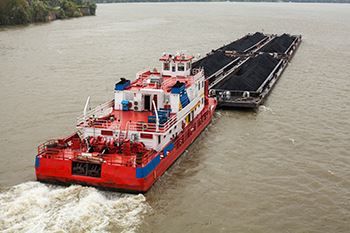
If you have been injured working on an offshore oil rig, platform, barge, jack-up rig, ship, or another vessel, a Louisiana Maritime Lawyer at the Wills Law Firm is prepared to help you get on the path to recovery. We are an experienced maritime injury law firm that helps oil rig workers, longshoremen, seamen, and other maritime employees in Louisiana and across the United States collect the financial compensation and benefits they need to recover from serious injuries.
A Louisiana Maritime Injury Attorney Can Help Protect Your Rights
When you are injured in a maritime accident it can be difficult to figure out what you should do. Your employer, insurance carriers, and other parties will want to interview you and may ask you to provide a sworn statement about the accident. It is important to speak with a lawyer as soon as possible. You should never provide any recorded, written, or sworn statements or testimony until you have consulted with your Louisiana maritime injury attorney. These companies and their lawyers are hoping that you will make a mistake and say something that can be used against you later on to hurt your case.
Your employer may attempt to convince you that you do not need to be represented by a Louisiana Maritime lawyer. They will tell you that the company will take care of everything and may even threaten to cut off your benefits if you hire an attorney. Other times the company will “brow-beat” the injured worker and convince them to settle the case and for them not to worry as the company will take care of him in the future or that the worker’s job will be secure. Do not fall into this trap – your interests are not the same as your employer’s and you have the right to be represented by legal counsel. Your lawyer will fight to protect all of your legal rights and will work to ensure that you get the maximum financial compensation that you are entitled to.
Oftentimes maritime employers will try to get an injured seaman or crew boat member to sign a release and accept a quick settlement offer. While you may be in need of money, it is important to know that these offers are generally lowball offers, representing only a small fraction of what your case is really worth. You should never sign a release or accept any offer until you have spoken with your Lousiana maritime attorney. If you take an offer and sign a release, you are giving up your legal rights to sue your company forever.
Legal Relief for Victims of Maritime Accidents
Federal and state laws offer important protections for people who are injured working on or near the waters of Louisiana. While these laws are designed to provide legal relief to accident victims and their families, maritime laws can be extremely complicated and are best navigated by a skilled lawyer who has extensive experience handling maritime injury cases.
If you have been working in the maritime industry for some time, you may already know of someone who has filed a lawsuit under the Jones Act or other maritime injury laws. You may also know that if you are classified as a seaman under the Jones Act and are injured or become ill on the job, your employer is required to pay you daily living expenses while you are living on land (maintenance), and the reasonable costs associated with your medical care and treatment (cure). In addition to these payments known as “maintenance and cure benefits,” you may also have the legal right to file a lawsuit against your employer if your accident was due to the negligent actions of your company or a fellow crew member.
It is important to know that even if you are not classified as a “seaman” under the Jones Act, you are likely to be protected under other maritime laws such as the Longshore Harbor & Workers’ Compensation Act or the Outer Continental Shelf Lands Act (OCSLA). An experienced Louisiana Jones Act attorney at our firm can review your case to identify the best courses of legal action available to you. Whether you were injured on an oil or gas rig, supply boat, crane, cargo ship, fishing boat, or another maritime vessel, we will work to get you the legal relief you need to deal with your accident and move forward with your life.
Oil, Gas, and Maritime Activities in Louisiana
Louisiana’s expansive waterway system has allowed for the development of a large number of inland and coastal ports throughout the state. According to the Ports Association of Louisiana, these ports are responsible for creating and supporting more than 400,000 jobs and $20 billion in personal earnings. The Port of South Louisiana ranks as the nation’s top water port in terms of total tonnage with more than 55,000 barges and 4,000 seagoing vessels making calls at the port each year. Located at the center of Louisiana’s Lower Mississippi River port complex, the Port of New Orleans is ranked 6th in the nation for total tonnage. This port handles more than 70 million tons of domestic and foreign waterborne trade and is recognized as the port of choice for the transportation of a diverse range of products, including steel, petroleum, coals, manufactured goods, coffee, and rubber.
According to the U.S. Energy Information Administration (EIA), Louisiana has 19 operating petroleum refineries and ranks second only to Texas in both total and operating refinery capacity. Louisiana’s refineries have the ability to process more than 3.2 billion barrels of crude oil each day which accounts for nearly one-fifth of the United States’ refining capacity. The Louisiana Offshore Oil Port (the Loop) is the first and only deepwater oil port located in the United States and has the capacity to import up to 1.2 million barrels of crude oil per day. The state also holds about 7 percent of the country’s natural gas reserves.
Jones Act FAQs
Who Does the Jones Act Protect?
The Jones Act does not protect all maritime workers. Instead, it only applies to those who are classified as “seamen.” You are classified as a seaman if you work in Louisiana’s maritime industry and:
- You work onboard a vessel “in navigation;”
- You spend a “significant amount of time” working onboard the vessel (typically 30 percent or more of your work hours); and,
- Your job duties “contribute to the work of the vessel.”
Ship crewmembers, officers, and captains will generally qualify for Jones Act protection, but these are by no means the only types of workers who can file Jones Act claims. Employees in all occupations who work on ships, boats, barges, floating cranes, floating rigs, motorized platforms, and other movable vessels and structures will typically be eligible to file claims as well.
If you do not qualify as a seaman, this does not mean that you are ineligible for compensation. It merely means that you must file your claims under a different statute, such as the Longshore and Harbor Workers Compensation Act (LHWCA) or the Outer Continental Shelf Lands Act (OCSLA).
When Does the Jones Act Apply?
The Jones Act applies to all on-the-job accidents that occur onboard vessels in navigation. This includes vessels and floating structures that are in transit or deployed in offshore or inshore waters, as well as those that are docked or moored in the water.
Under the Jones Act, injured seamen who live in Louisiana can file two types of claims: (i) a “no-fault” claim for maintenance and cure and (ii) a fault-based claim for full compensation. The Jones Act’s “no-fault” provisions apply regardless of how you got injured while filing a fault-based claim requires proof that your employer’s negligence caused or contributed to your injuries.
When Should a Seaman Contact a Louisiana Maritime Law Firm?
Technically, you have up to three years from the date of your accident to file a Jones Act claim. However, to maximize your chances of recovery, it is important to file your claim as soon as possible. Your first step is to arrange a free consultation, and you can contact our firm to schedule an appointment 24/7.
Contact a Louisiana Maritime Lawyer – Free Case Review
If you have been injured in a maritime accident in New Orleans, Baton Rouge, Shreveport, or anywhere along the Gulf of Mexico, coastal waters, canals, Mississippi river, or waterways of Louisiana, then contact a Maritime injury Lawyer in Louisiana to schedule a free consultation. The Willis Law Firm, a national maritime injury law firm, takes injury cases on a contingency fee basis – you will not have to pay any legal fees or expenses until we obtain a financial recovery for you.